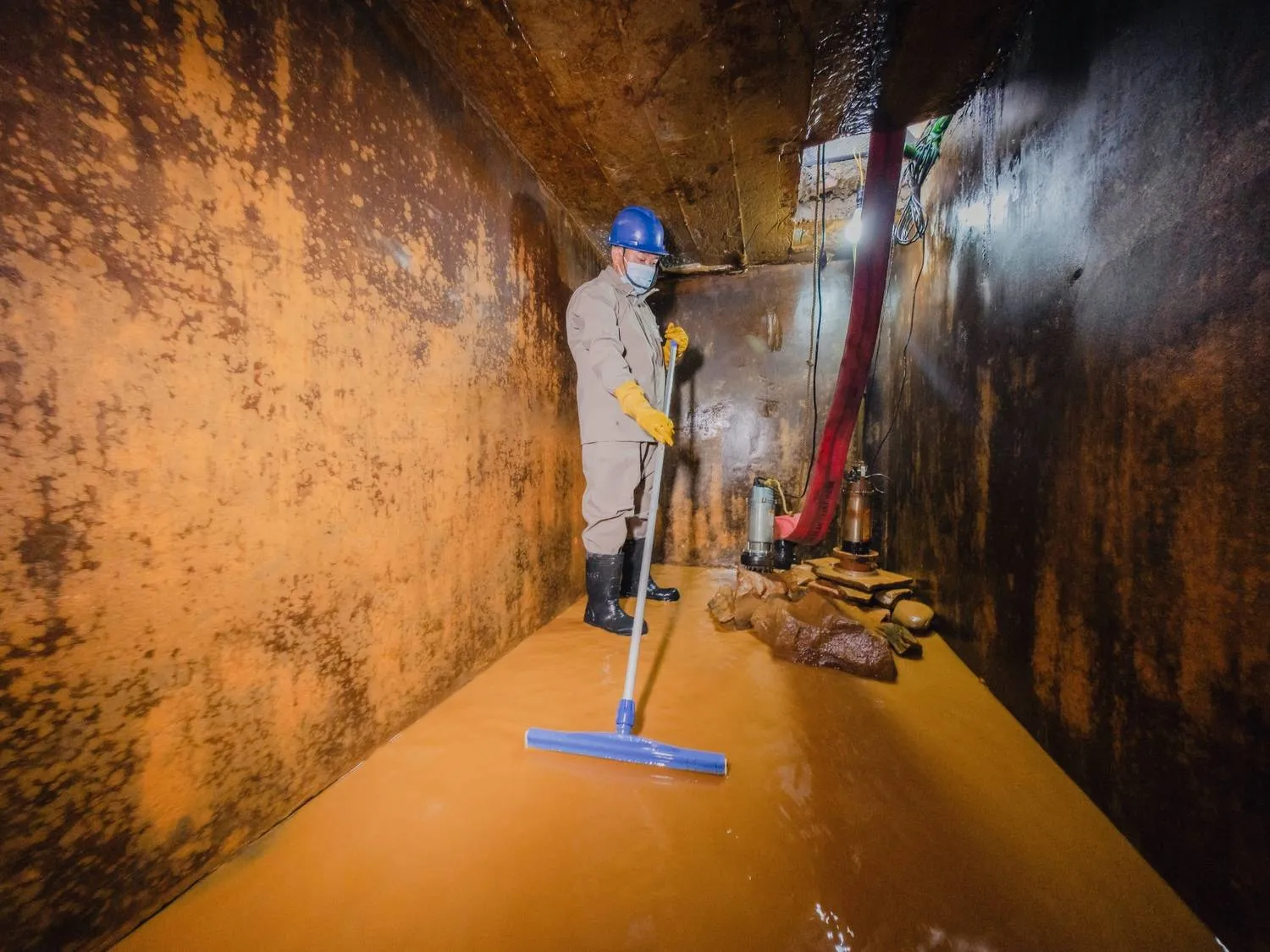
Water Tank Cleaning Process
Step 1: Mechanised De-watering
Complete removal of stored water using advanced mechanical pumping systems to ensure the tank is fully emptied.
Step 2: Sludge Dilution
Remaining settled sludge at the bottom is diluted to loosen hardened deposits for effective removal.
Step 3: High-Pressure Cleaning with KMnO₄ Solution
All internal walls and ceiling are thoroughly pressure washed using Potassium Permanganate (KMnO₄) treated water to remove dirt, algae, and bacterial buildup.
Step 4: Suction with Powerful German Machine
Loosened sludge and contaminants are extracted using high-capacity German suction equipment to ensure deep cleaning.
Step 5: Final Wash with KMnO₄ Water
A second rinse with KMnO₄ treated water is performed to ensure maximum cleanliness and oxidation of impurities.
Step 6: Final Suction
Residual water and remaining particles are completely removed to leave the tank clean and dry.
Step 7: Disinfection
Final-stage disinfection is carried out using approved disinfectants to eliminate harmful microorganisms and make the tank hygienically safe for use.
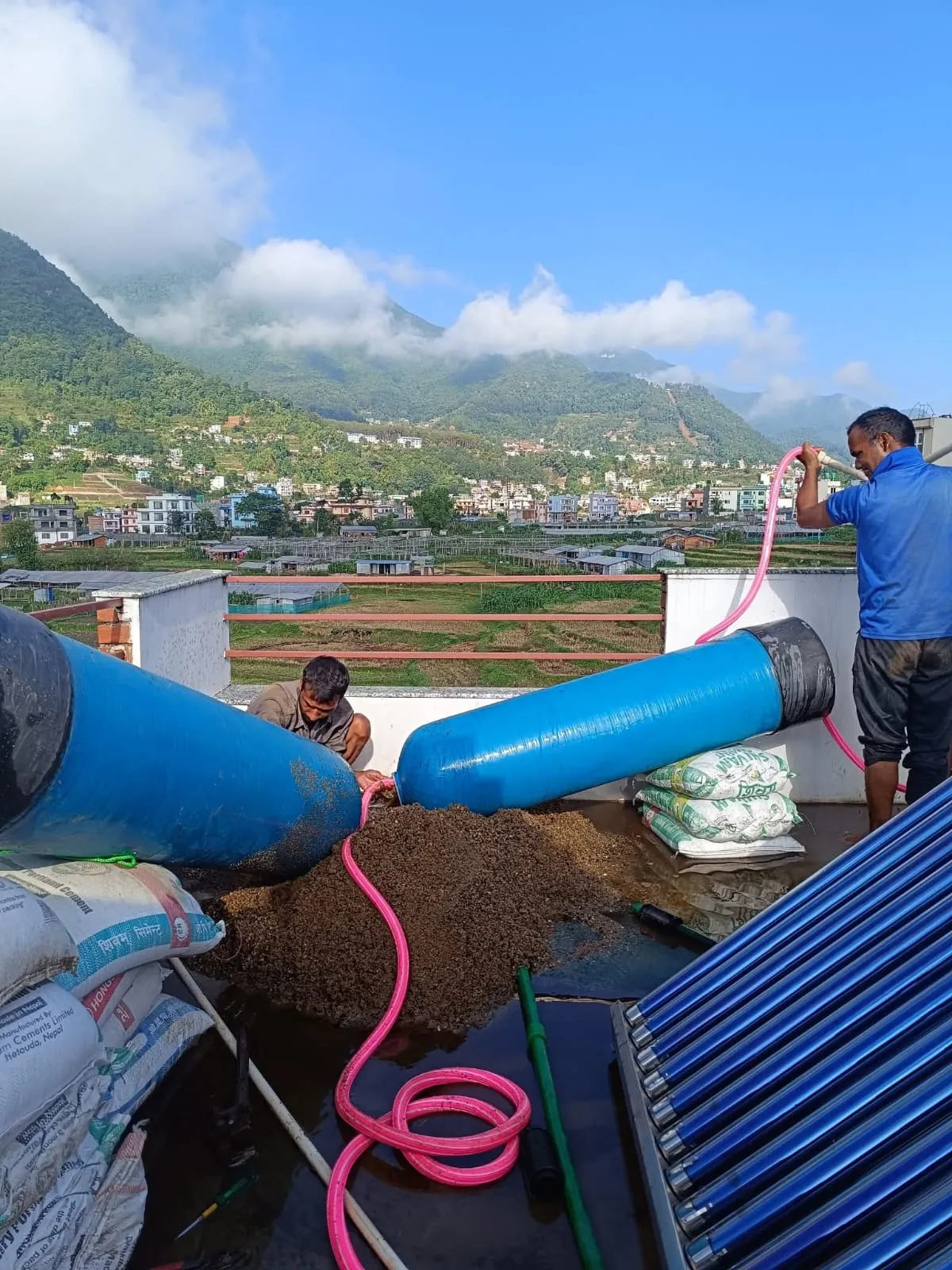
Filter vessel cleaning process
Filter vessels are essential in water treatment systems for removing impurities, sediments, and contaminants. Over time, dirt, biofilm, and scale build up inside the vessel, reducing efficiency and affecting water quality.
Why Filter Vessel Cleaning is Important
- Reduced filtration efficiency
- Increased pressure drop
- Bacterial growth and odor
- Poor water quality
Step-by-Step Cleaning Process
1. System Shutdown
Turn off the pump, close valves, and release pressure.
2. Drain the Vessel
Remove all water and sludge through the drain valve.
3. Open the Vessel
Carefully open the manhole and ensure proper ventilation.
4. Remove Filter Media
- Sand
- Activated carbon
- Gravel
5. Manual Cleaning
Use a high-pressure jet and scrubbing to remove dirt and deposits.
6. Chemical Cleaning
Use appropriate chemicals depending on contamination:
- Chlorine: Disinfection (50–200 ppm)
- HCl / Citric Acid: Scale removal (5–10%)
- Caustic Soda: Oil and grease removal (1–2%)
- Hydrogen Peroxide: Biofilm removal
7. Soaking Time
Allow chemicals to sit for 30 minutes to 2 hours.
8. Rinse Thoroughly
Wash with clean water to remove chemical residues.
9. Reinstall Media
Layer gravel first, then sand or carbon.
10. Backwash and Test
Run backwash cycle and check water quality.
Safety Precautions
- Wear gloves and safety gear
- Ensure ventilation
- Do not mix acid and chlorine
Conclusion
Regular cleaning of filter vessels improves performance, ensures clean water, and increases system life.